

Between 1932-34, in the height of what has been dubbed the “Public Enemy Era,” two romantically-involved young sociopaths known to history as Bonnie and Clyde captured the imagination of the downtrodden during 

Then they were effectively forgotten, until an eponymous movie that fictionalized and idealized them made film history for its gritty realism when it opened on the big screen in 1967. Bonnie and Clyde, portrayed by Faye Dunaway and Warren Beatty, became legends—if of a different kind—all over again. And this time, their memory never faded.

In They Kill People: Bonnie and Clyde, a Hollywood Revolution, and America’s Obsession with Guns and Outlaws [2026]—a remarkable, genre-bending achievement that effortlessly blends history, film studies, and a socio-cultural survey of the quirkier attributes of Americana—writer/producer Kirk Ellis manages to write so well that even the most screen-addicted ADHD-addled reader of the 2020s will be gripped by the content. For me, as a historian and self-proclaimed film geek, this book checked all the boxes! I literally could not put it down. And how often can you say that about any work of nonfiction?

As Ellis points out, the story of the real Bonnie and Clyde is also the story of Dillinger, Pretty Boy Floyd, Ma Barker, and the Depression-era Midwest that saw widespread impoverishment and a virtually nonexistent social safety net that meant starvation was a prospect for many. Foreclosures were common, with farm families turned out into the streets, so it is not surprising that the locals frequently found themselves rooting for the bank robbers rather than the banks. In an attempt to track down the bad guys, J. Edgar Hoover’s nascent Bureau of Investigation—later the FBI—exaggerated their exploits and tagged them with flashy nicknames which, unintentionally perhaps, glamorized them for a sympathetic audience. That could explain why so many of them were able to act so brashly in broad daylight and yet evade being killed or captured for so long.

But America’s fascination with criminals long predates Bonnie and Clyde and their ilk. More famous and enduring perhaps remains Jesse James and his James-Younger gang, bloodthirsty pro-Confederate Missouri guerrillas—Frank James rode with Quantrill’s Raiders in the infamous Lawrence Massacre where some two hundred mostly unarmed civilians were murdered—who turned outlaw after Appomattox and robbed trains, banks, and stagecoaches in audacious shootouts that frequently killed innocent bystanders who got in the way. Yet, “Lost Cause” mythology sentimentalized these killers as heroic defenders of the southern way of life against Yankee predators. That was carried over into their romanticized portrayal on the big screen in classic Hollywood films that cast them as folk antiheroes driven to a life of crime by forces beyond their control. And as long as the violence could somehow be justified, movie audiences ate it up.

Which brings us to the second major topic of this book, the landmark 1967 Bonnie and Clyde film that helped usher in the era of New Hollywood cinema. Directed by the already celebrated auteur Arthur Penn, and produced by Warren Beatty, who also starred as Clyde alongside emerging new talent Faye Dunaway as Bonnie, this film broke all the established rules of what was permitted in the soon-to-be obsolete restrictions of the Hays Code that had long censored moviemaking, while appealing to what theatergoers had already been craving for decades. The Hays Code had prohibited profanity as well as scenes showcasing graphic violence, nudity, or sex, and enforced a morals clause that proscribed glorifying villains and demanded that they meet justice before the credits rolled. Its influence had waned with the collapse of the old Hollywood studio system and changing societal morals, but it was Bonnie and Clyde that effectively stuck a fork in it.

Like movies about the James Gang, this one was also highly embroidered and friendly to the protagonists. Far more attractive—and each about seven inches taller than the outlaws they portrayed—this pair are a fun-loving gal and guy on the run in a fast, stylish Ford V-8 who stumble into the murder-and-mayhem business without really meaning to, but once there they don’t hesitate to make a religion out of it. In the bad old days of the Hay’s code, people got shot and fell down and died; there was never any blood and certainly no death struggles. I knew that, but what I did not know but learned from Ellis was that it was also forbidden to depict a gun, a gunshot, and a person being shot in the same frame. That taboo is violated early in the movie in a single sequence that has Clyde shoot a bank manager in the face who had jumped onto the running board of their getaway car. And there’s plenty more gunplay and graphic bloodshed, right down to the final gory slow motion ambush where Bonnie and Clyde’s bodies are riddled with bullets.


But despite the carnage, there is a lot more to it, with an intellectual depth and complexity that transcends a typical action film, yet there’s no shortage of action and not a single wasted scene. Much credit for this lies in the close if sometimes clashing collaboration between Penn and Beatty that demanded nothing less than artistic excellence in even the minutest moments. Just as Kirk Douglas not only delivered stellar performances but served as the driving force that shaped both Paths of Glory and Spartacus, Beatty both starred and played an outsize role in the making of this masterwork. And there’s also the script, heavily influenced by French New Wave cinema, which adds nuance with an imagined subplot that has the dashing Clyde suffering from erectile dysfunction in the arms of an increasingly frustrated Bonnie.

Absent Hays Code obstacles, in the blood-spattered end it is a love story, not a morality play. And it was timely: instead of vanquished rebels or starving Okies, the anti-authority impulse was embraced by the 1960s counterculture. An instant hit that was both a critical and commercial success, I first saw it on the big screen as a ten year old and even as a child I was blown away by it. My admiration has only increased with each viewing over the more than a dozen times that I have seen it since, including again very recently. It is indeed a masterpiece in cinematography.

It was the film geek in me that drew me to the book, as noted earlier, and the behind-the-scenes treatment is truly spectacular, but the greater accomplishment is the way Ellis utilizes the film as a lens to focus in on the American fascination with gangsters, violence, and guns. The historical Clyde was petty criminal when it came to cash, but he managed to raid armories to amass a huge collection of stolen guns of all kinds along the way. If there are religious cults and political cults in the United States, there is no more prominent cult these days than the Second Amendment cult, which somehow irrationally places the right to unconditional gun ownership above all other freedoms, while dismissing the obvious correlations between this gun culture and both widespread gun violence and the mass shootings that are routine only in America. Ellis explores this sensitive and controversial topic expertly.
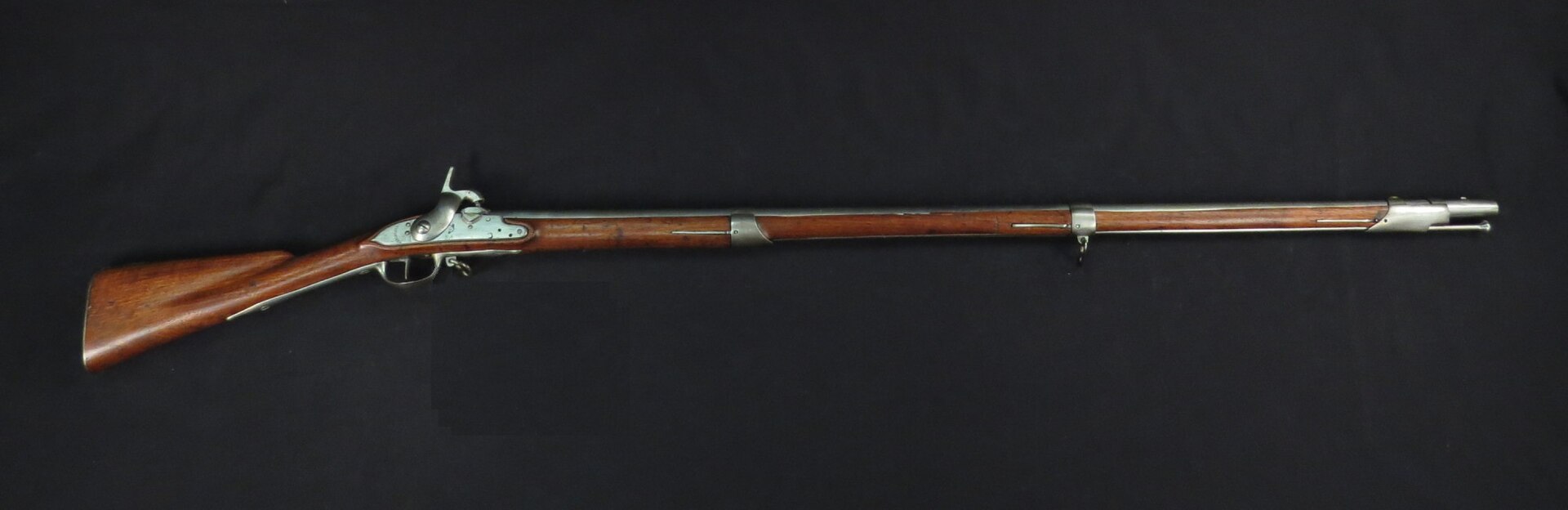
The Second Amendment states: “A well regulated Militia, being necessary to the security of a free State, the right of the people to keep and bear Arms, shall not be infringed.” It could be the most vague, grammatically awkward sentence ever to become part of constitutional law, which only exacerbates the difficulty in debating its intent. At the time of ratification, standing armies like those of Great Britain were viewed by the Framers as agents of tyranny. But it was yet necessary to defend against enemies foreign and domestic—indigenous tribes spring to mind immediately—so it made sense that everyone was encouraged to own a musket and be available to form a militia at a moment’s notice (like the “Minute Men” of the first days of the American Revolution). That was the way the amendment was interpreted until very recent times—in 2008 in fact, when in a majority opinion delivered by Justice Antonin Scalia in District of Columbia v. Heller, the Supreme Court radically redefined the Second Amendment to guarantee an individual’s right to self-defense and gun ownership.
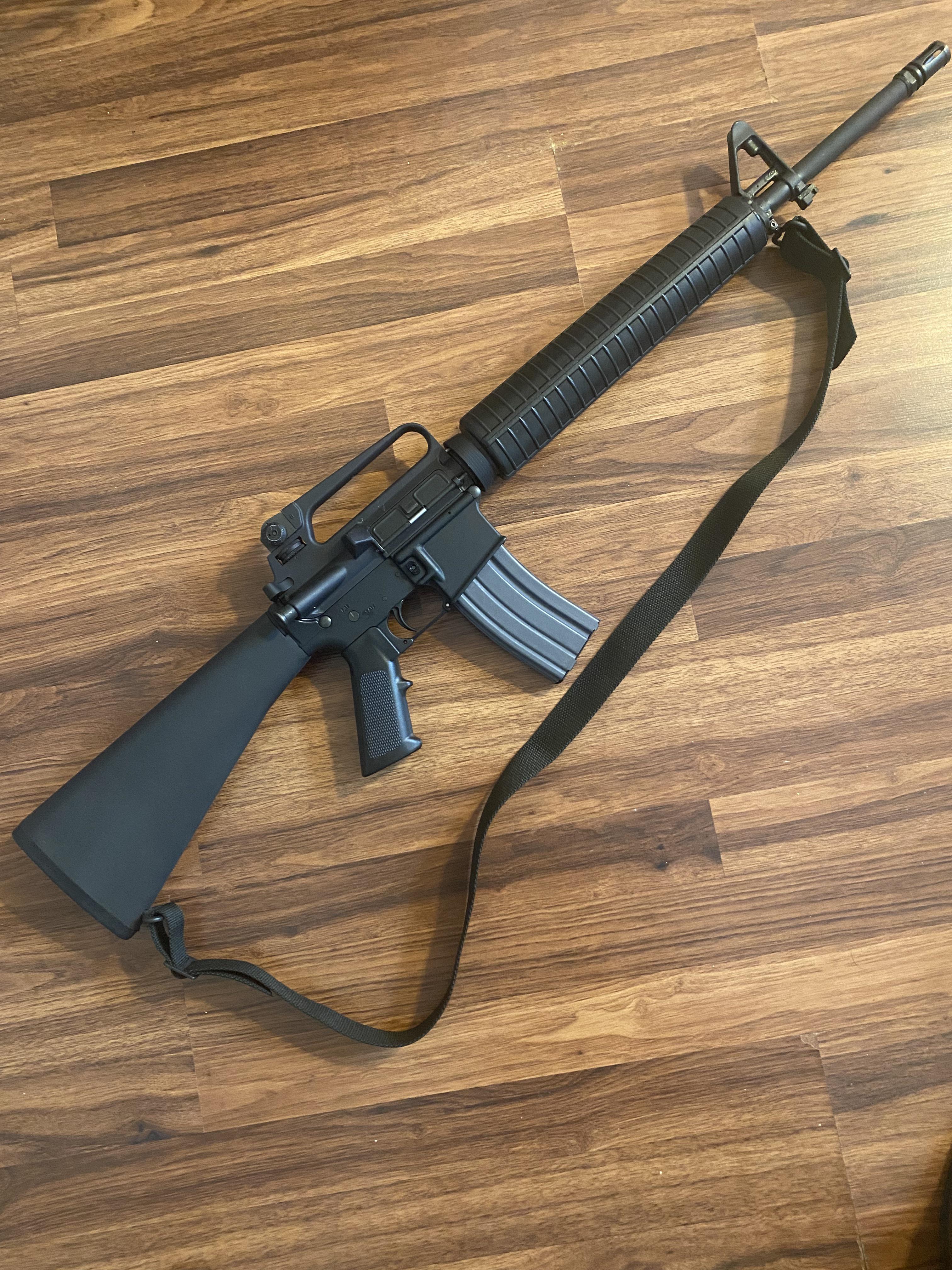
In 1791, the year the amendment was ratified, firearms were primarily muzzle-loading, single-shot flintlock muskets and pistols, although there were more advanced repeating rifles in development, if not in general use. Today, a 9mm Glock sidearm comes stock with a 33-round magazine; larger aftermarket versions are available, and a person can fire 30-60 rounds in minute. A semi-automatic AR-15 style rifle, popular with hunters, gun enthusiasts, and mass shooters, can fire 45 to 60 rounds a minute. If (illegally but with no great difficulty) modified to fully automatic mode, it can fire 700 to 800 rounds per minute. Even easier is to add a bump stock, an accessory that uses the weapon’s recoil to rapidly bounce the trigger against a shooter’s finger, mimicking the speed of a machine gun to fire 400 to 800 rounds per minute. Bump stocks became illegal in 2018, following their use in a Las Vegas mass shooting that killed 58 and wounded 500 more, but a 2024 Supreme Court ruling reversed that, so almost anyone can buy one. While some places like Massachusetts and New York have limited restrictions on weapons purchases, in most states you can fill out a form, flash a driver’s license at a clerk, and walk out with a Glock or an AR-15.

Except for hunting, most Americans outside of frontier communities did not ordinarily carry firearms until after the Civil War. Even so, the myth of guns winning the West has been vastly exaggerated, and strict gun control on the local level was common: to keep the peace, many towns mandated that visitors check all firearms upon entry. Old West sheriffs like Gene Hackman’s Little Bill Daggett in the film Unforgiven, who banned all guns in Big Whiskey, would have been baffled by the ruling in Heller. But the notion of gun control on the federal level did not arise until the 1930s gangster era when fugitives like Clyde Barrow outgunned the police with machine guns. Clyde’s favorite in real life—and Beatty brandishes it in the film—was a .30-06 caliber Browning Automatic Rifle (BAR) with a detachable box magazine that held 20 rounds, but he modified these by cutting down the barrels and welding two magazines together to double the capacity. The 1,300 lawmen gunned down during the Public Enemy era led to the passage of the National Firearms Act (NFA) of 1934 that outlawed machine guns and sawed-off shotguns. Given the extreme tendencies of our current right-wing SCOTUS, we have to wonder if NFA will be one day be overturned and we will see machine guns at gas stations and coffee shops in open carry states.
An American obsession with guns and violence, as well as the tendency to glamorize criminals, helped to propel Bonnie and Clyde to box office success, but it was just the first of many in this genre to follow in short order, including Sam Peckinpah’s The Wild Bunch, and Francis Ford Coppola’s The Godfather—considered by some to be Hollywood’s finest film of all time. Critics crowned these motion pictures with accolades, but of course there were also dozens and dozens of B-grade flicks, heavy on the bloodshed and light on the talent and the plot. But Bonnie and Clyde set the stage.
A few years back, I read Public Enemies: America’s Greatest Crime Wave and the Birth of the FBI, 1933-34 [2004], by Bryan Burrough, a terrific treatment cited by Ellis in his narrative, so I was already familiar with the real murderous duo, but even so the film succeeds so well that I still can’t help but hear Faye Dunaway’s voice when I read the last stanza of Bonnie Parker’s final poem, “The Story of Bonnie and Clyde” . . .

Some day they’ll go down together;
And they’ll bury them side by side;
To few it’ll be grief
To the law a relief
But it’s death for Bonnie and Clyde.
Click for the complete “Story of Bonnie and Clyde” poem
Note: This review is based upon an uncorrected proof obtained through an early reviewer’s program.

